
cotswolds distillery - exclusive tasting
Some whisky tastings go by smoothly, one after the other. And then there are others where, as well as the whisky, you take home a story too.
The one dedicated to the Cotswolds Distillery, during the Götzis Tasting Days, was definitely the latter.
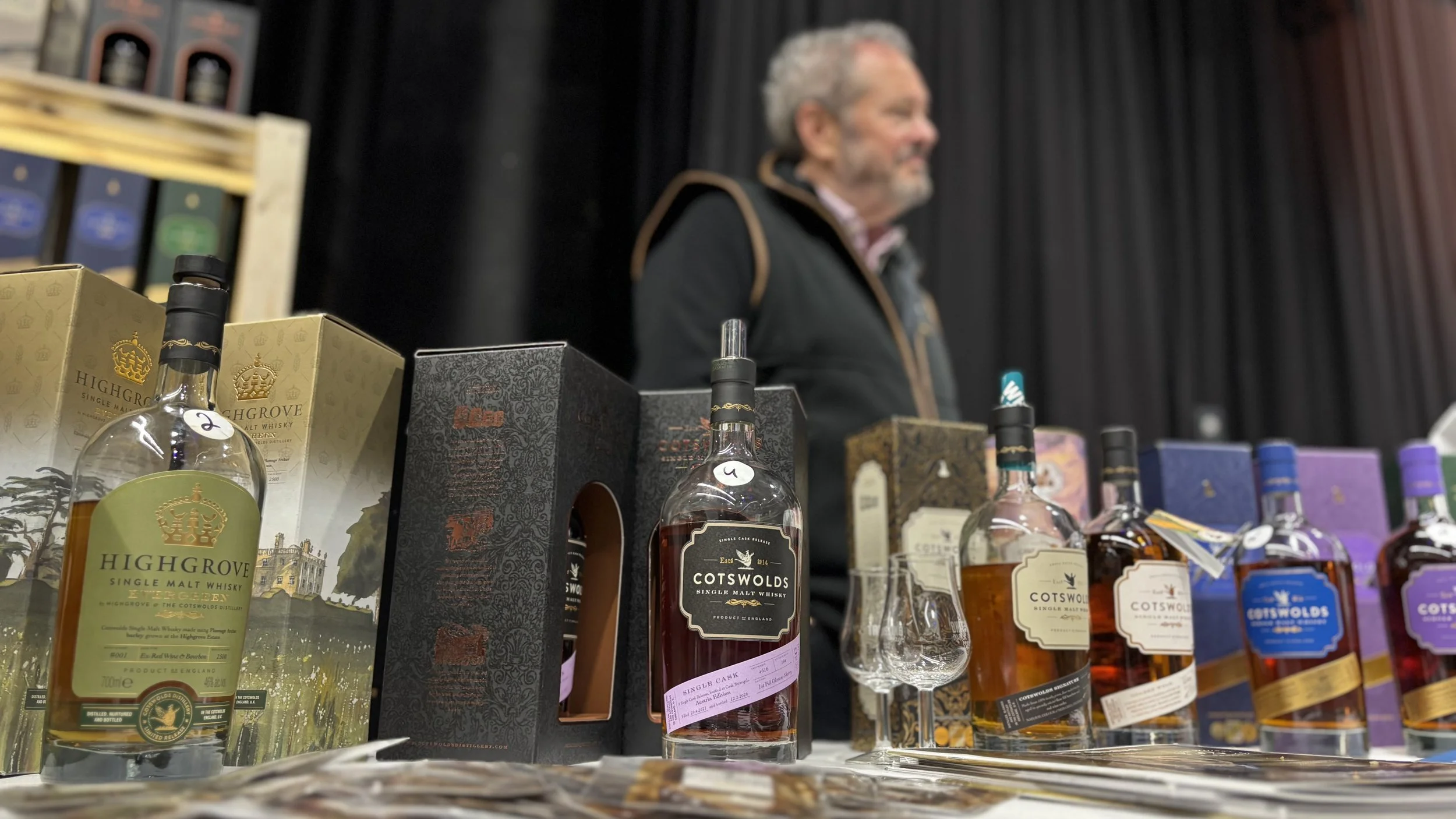
Leading the session was Daniel Szor, founder of the distillery. And from the very first minutes, it was clear that this would not be a simple tasting, but something more personal.
a rather simple story
Szor doesn’t come from the world of whisky. For thirty years, he worked in finance in New York.
Then, at some point, something changed.
He tells of a house in the English countryside, of weekends away from the city, and of a detail that stuck in his mind: a field of barley, right next to the house.
That’s where the idea was born.
If you have local raw materials, a strong regional identity and millions of visitors every year, why not build something of your own?
In 2014, the Cotswolds Distillery took shape. Small at first, but with a very clear vision: to do everything in-house and develop a recognisable style.

the cotswolds style
One of the most interesting aspects was getting a glimpse behind the scenes. The aim is to produce a very expressive spirit, particularly on the fruity side. To achieve this, they work on several levels:
long fermentations, around 90 hours
the use of two yeasts
fairly narrow distillation cuts
But the real key lies in the casks.
Much of the character comes from the so-called STR casks (Shaved, Toasted, Re-charred), developed by Jim Swan. These are casks that allow for a great deal of flavour to be developed in a relatively short time, which is essential for a young distillery.
the tasting range
The tasting was structured in a very linear fashion. Each whisky added a piece to the picture.
1. Signature Single Malt

We start with the house classic.
The Cotswolds Signature Single Malt defines the distillery’s style: matured in ex-bourbon and STR casks, with a good balance between sweetness and freshness.
In the glass, you’ll find:
honey, citrus, red fruit, a slight hint of jam.
It’s an accessible whisky, yet with enough depth to never feel mundane.
2. Founder’s Choice
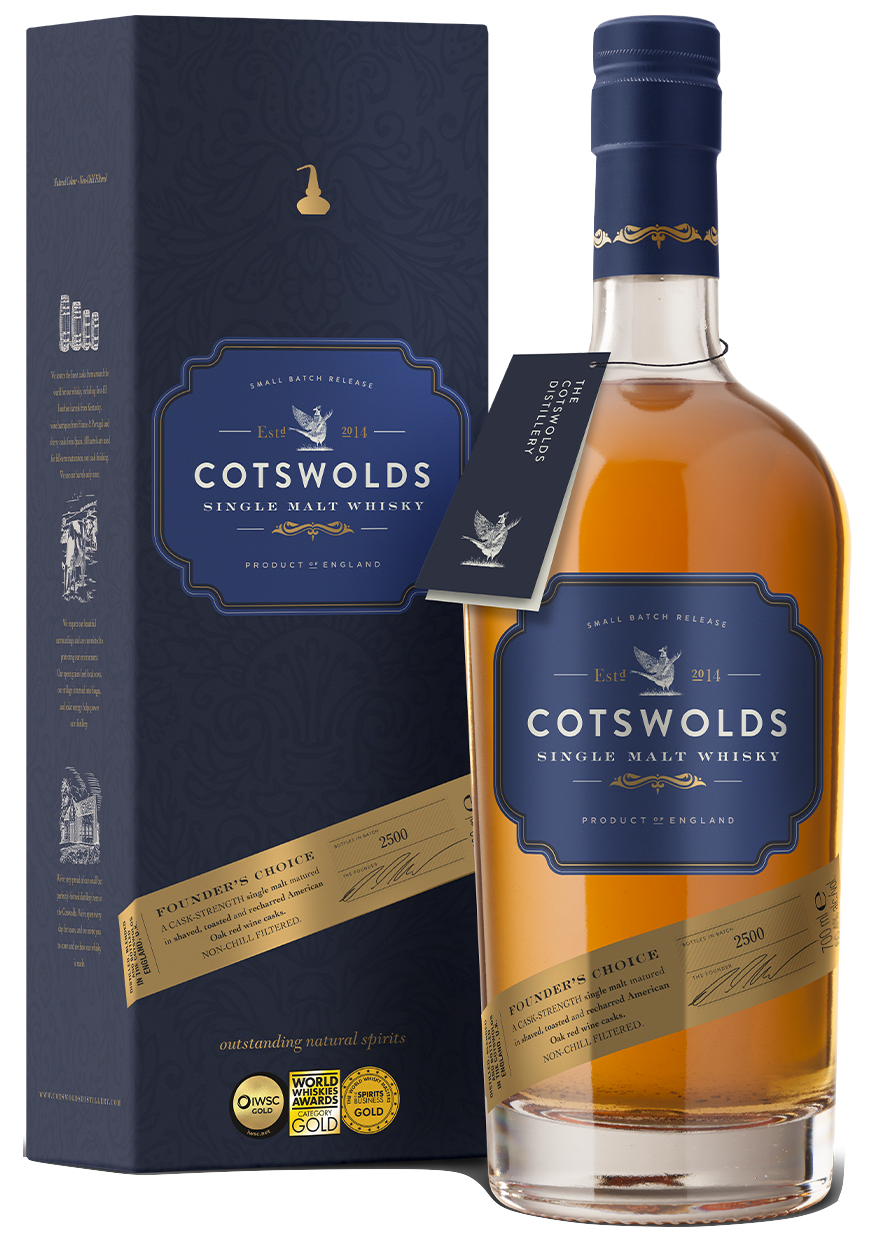
Here we change pace.
The Cotswolds Founder’s Choice is bottled at full strength and matured entirely in STR casks. You can tell straight away: it’s more intense, more concentrated.
The following emerge:
ripe red fruits, chocolate, an almost ‘liqueur-like’ component.
This is the distillery’s more direct side, the one that doesn’t try to smooth out the rough edges too much.
3. Highgrove
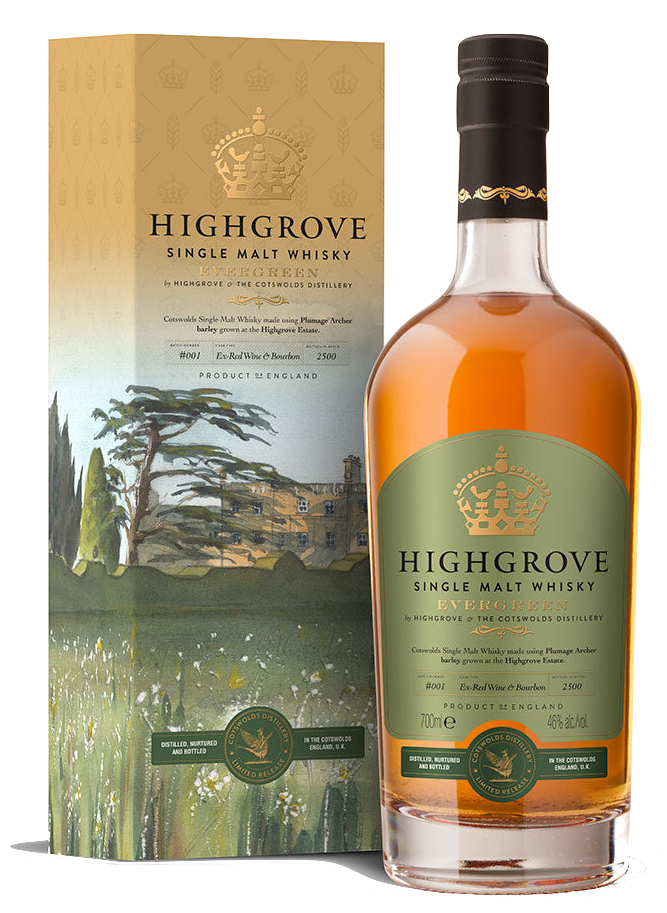
This was one of the most interesting moments.
It is not part of the standard range and stems from a collaboration linked to King Charles III’s residence.
Here, the main difference lies in the raw material, and the result is a whisky with a lighter overall tone:
floral, fruity, very smooth.
It gives the impression of something more ‘relaxed’, yet always consistent with the house style.
4. Oloroso Sherry Hogshead
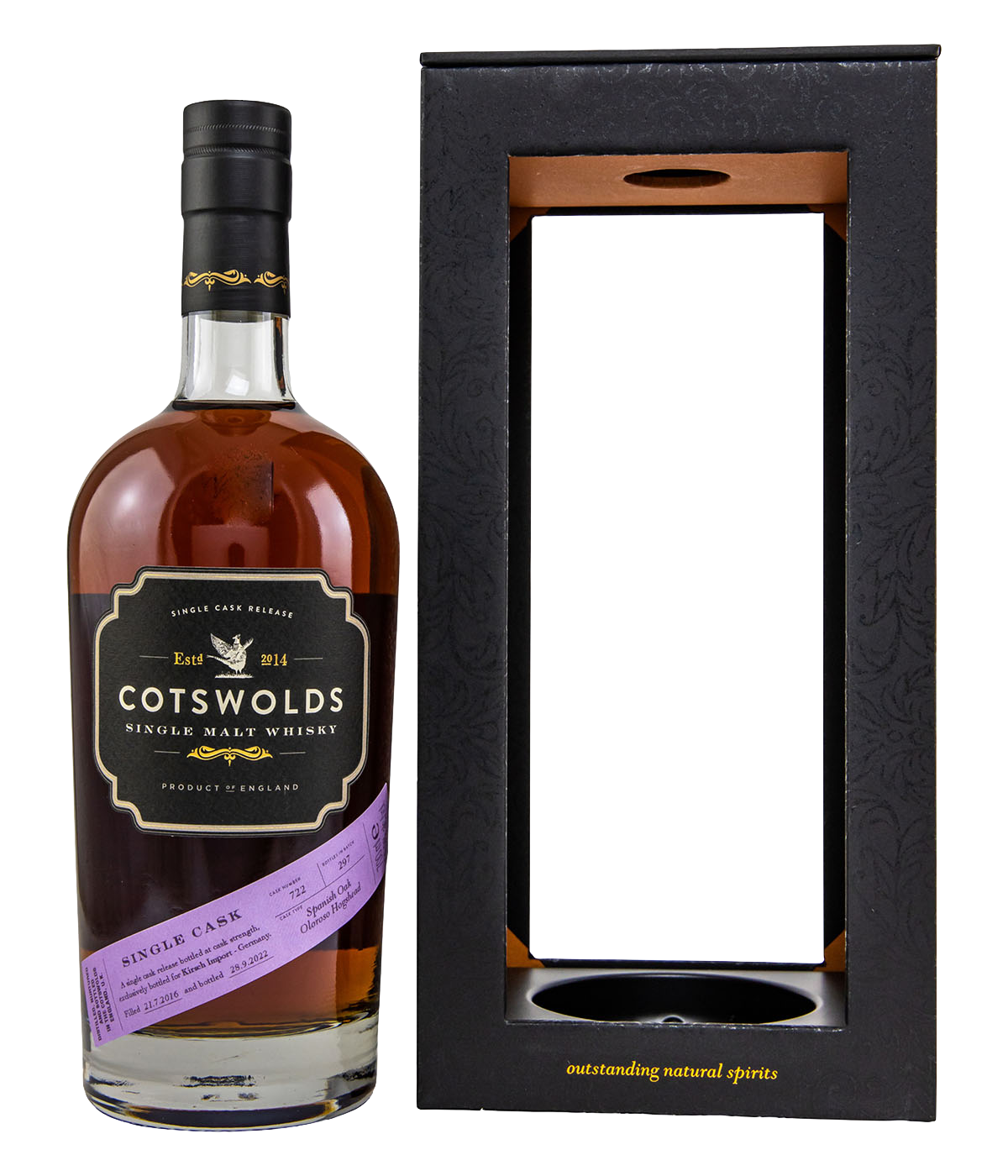
A decidedly more intense single cask.
The cask makes itself felt more here:
dried fruit, spices, dark notes, almost like a Christmas cake.
It is the classic whisky to be savoured slowly, perhaps at the end of the evening.
5. Peated Cask
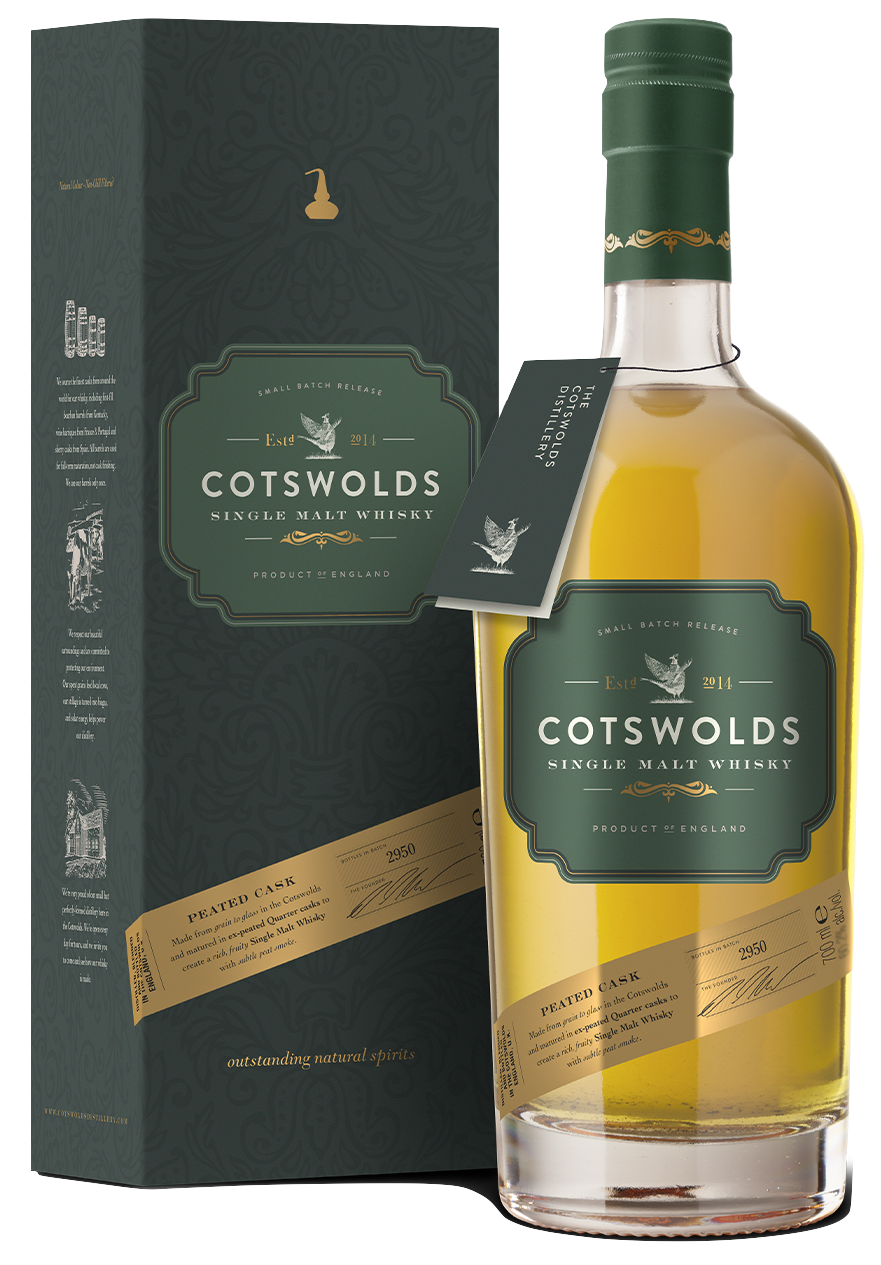
The finale was perhaps the most surprising.
It is not a peated whisky in the traditional sense. It is matured in casks that previously held peated whisky, and this changes the approach significantly.
The smoke is light, remaining in the background:
a hint of smokiness, vanilla, sweetness and fruit.
Rather than taking centre stage, the peat here is a detail that adds complexity.
a look at english whisky
One aspect that emerged clearly is that English whisky is finding its own path.
There is no sense of wanting to imitate Scotland. Rather, a different balance is being sought, with greater attention to the raw materials and an immediately recognisable style.
The Cotswolds Distillery is one of the most concrete examples of this approach.
conclusions
This tasting worked because it was coherent.
Each whisky made sense within the tasting journey, and everything came back to that initial idea: to build something that starts with the local terroir and ends up in the glass without too many detours.
And in the end, more than the individual bottles, this is what remains: the feeling of having tasted a vision that is taking shape.
As Dan says: “You have to have a vision.”
For more: https://www.cotswoldsdistillery.com 🥃
🎥 If you’d like to see the full tasting, you can find the video here:
-
Ci sono degustazioni che scorrono via lisce, una dopo l’altra.
E poi ce ne sono altre in cui, oltre ai whisky, ti porti a casa anche una storia.Quella dedicata alla Cotswolds Distillery, durante i Tasting Days di Götzis, è stata decisamente la seconda.
A guidarla c’era Daniel Szor, fondatore della distilleria. E fin dai primi minuti si è capito che non sarebbe stata una semplice degustazione, ma qualcosa di più personale.
Una storia piuttosto semplice
Szor non arriva dal mondo del whisky.
Per trent’anni ha lavorato nella finanza a New York.Poi, a un certo punto, qualcosa cambia.
Racconta di una casa nella campagna inglese, di weekend lontano dalla città, e di un dettaglio che gli è rimasto in testa: un campo d’orzo, proprio accanto a casa.
Da lì nasce l’idea.
Se hai materia prima locale, un territorio forte e milioni di visitatori ogni anno, perché non costruire qualcosa di tuo?
Nel 2014 prende forma la Cotswolds Distillery. Piccola all’inizio, ma con un’idea molto chiara: fare tutto in casa e costruire uno stile riconoscibile.
Lo stile Cotswolds
Uno degli aspetti più interessanti è stato proprio entrare un po’ nel “dietro le quinte”.
L’obiettivo è ottenere un distillato molto espressivo, soprattutto sul lato fruttato.
Per farlo, lavorano su diversi livelli:fermentazioni lunghe, intorno alle 90 ore
utilizzo di due lieviti
tagli di distillazione piuttosto stretti
Ma il vero punto chiave sono le botti.
Gran parte del carattere arriva dalle cosiddette STR casks (Shaved, Toasted, Re-charred), sviluppate da Jim Swan. Sono botti che permettono di ottenere tanto sapore in tempi relativamente brevi, cosa fondamentale per una distilleria giovane.
I whisky della degustazione
La degustazione è stata costruita in modo molto lineare. Ogni whisky aggiungeva un pezzo al quadro.
1. Signature Single Malt
Si parte dal classico della casa.
Il Cotswolds Signature Single Malt è quello che definisce lo stile della distilleria: maturazione in ex-bourbon e STR, buon equilibrio tra dolcezza e freschezza.
Nel bicchiere si trovano:
miele
agrumi
frutta rossa
una leggera nota di marmellata
È un whisky immediato, ma con abbastanza profondità da non risultare mai banale.
2. Founder’s Choice
Qui si cambia passo.
Il Cotswolds Founder’s Choice è imbottigliato a gradazione piena e maturato interamente in botti STR. Si sente subito: più intenso, più concentrato.
Emergono:
frutti rossi più maturi
cioccolato
una componente quasi “liquorosa”
È il lato più diretto della distilleria, quello che non cerca di smussare troppo gli angoli.
3. Highgrove
Questo è stato uno dei momenti più interessanti.
Non è un prodotto della gamma standard e nasce da una collaborazione legata alla residenza di Re Carlo III.
Qui cambia soprattutto la materia prima, e il risultato è un whisky più leggero nel tono generale:
floreale
fruttato
molto scorrevole
Dà l’idea di qualcosa di più “rilassato”, ma sempre coerente con lo stile della casa.
4. Oloroso Sherry Hogshead
Un single cask decisamente più intenso.
La botte qui si fa sentire di più:
frutta secca
spezie
note scure, quasi da dolce natalizio
È il classico whisky da prendersi con calma, magari a fine serata.
5. Peated Cask
La chiusura è stata forse la più sorprendente.
Non è un whisky torbato in senso classico. Viene maturato in botti che hanno contenuto whisky torbato, e questo cambia molto l’approccio.
Il fumo è leggero, resta sullo sfondo:
un accenno di affumicato
vaniglia
dolcezza e frutto
Più che protagonista, la torba qui è un dettaglio che aggiunge complessità.
Uno sguardo al whisky inglese
Un aspetto che è emerso chiaramente è che il whisky inglese sta trovando una sua strada.
Non c’è la sensazione di voler imitare la Scozia. Piuttosto, si cerca un equilibrio diverso, con più attenzione alla materia prima e a uno stile immediatamente riconoscibile.
La Cotswolds Distillery è uno degli esempi più concreti di questo approccio.
Conclusioni
Questa degustazione ha funzionato perché era coerente.
Ogni whisky aveva un senso all’interno del percorso, e tutto tornava a quell’idea iniziale: costruire qualcosa che parta dal territorio e arrivi nel bicchiere senza troppi giri.
E alla fine, più che le singole bottiglie, resta proprio questo: la sensazione di aver assaggiato una visione che sta prendendo forma.
Come dice Dan: “You have to have a vision.”
🎥 Se vuoi vedere la degustazione completa, trovi il video qui 👈
-
Es gibt Verkostungen, die reibungslos ablaufen, eine nach der anderen. Und dann gibt es andere, bei denen man neben dem Whisky auch eine Geschichte mit nach Hause nimmt.
Die Verkostung der Cotswolds Distillery während der Tasting Days in Götzis gehörte definitiv zur zweiten Kategorie.
Geleitet wurde sie von Daniel Szor, dem Gründer der Brennerei. Und schon in den ersten Minuten wurde klar, dass es keine einfache Verkostung werden würde, sondern etwas Persönlicheres.
Eine ziemlich einfache Geschichte
Szor kommt nicht aus der Welt des Whiskys. Dreißig Jahre lang arbeitete er im Finanzwesen in New York.
Dann, irgendwann, ändert sich etwas.
Er erzählt von einem Haus auf dem englischen Land, von Wochenenden fernab der Stadt und von einem Detail, das ihm im Gedächtnis geblieben ist: ein Gerstenfeld, direkt neben dem Haus.
Daraus entstand die Idee.
Wenn man lokale Rohstoffe, eine starke Region und Millionen von Besuchern pro Jahr hat, warum dann nicht etwas Eigenes aufbauen?
Im Jahr 2014 nahm die Cotswolds Distillery Gestalt an. Anfangs klein, aber mit einer sehr klaren Idee: alles selbst zu machen und einen wiedererkennbaren Stil zu entwickeln.
Der Cotswolds-Stil
Einer der interessantesten Aspekte war gerade der Blick hinter die Kulissen.
Das Ziel ist es, ein sehr ausdrucksstarkes Destillat zu erhalten, vor allem was die Fruchtigkeit betrifft. Um dies zu erreichen, arbeiten sie auf verschiedenen Ebenen:
lange Gärzeiten, etwa 90 Stunden
Verwendung von zwei Hefen
eher enge Destillationsfraktionen
Aber der eigentliche Schlüssel sind die Fässer.
Ein Großteil des Charakters stammt aus den sogenannten STR-Fässern (Shaved, Toasted, Re-charred), die von Jim Swan entwickelt wurden. Das sind Fässer, mit denen man in relativ kurzer Zeit viel Geschmack erzielen kann, was für eine junge Brennerei entscheidend ist.
Die Whiskys der Verkostung
Die Verkostung war sehr linear aufgebaut. Jeder Whisky fügte dem Gesamtbild ein Stück hinzu.
1. Signature Single Malt
Wir beginnen mit dem Klassiker des Hauses.
Der Cotswolds Signature Single Malt definiert den Stil der Brennerei: Reifung in Ex-Bourbon- und STR-Fässern, gute Balance zwischen Süße und Frische.
Im Glas finden sich:
Honig, Zitrusfrüchte, rote Früchte, eine leichte Marmeladennote.
Es ist ein Whisky, der sofort anspricht, aber dennoch genug Tiefe besitzt, um niemals banal zu wirken.
2. Founder’s Choice
Hier ändert sich das Tempo.
Der Cotswolds Founder’s Choice wird mit vollem Alkoholgehalt abgefüllt und vollständig in STR-Fässern gereift. Das spürt man sofort: intensiver, konzentrierter.
Herausstechen:
reifere rote Früchte, Schokolade, eine fast „likörartige“ Komponente.
Er ist die direkteste Seite der Brennerei, die nicht versucht, die Ecken zu sehr abzurunden.
3. Highgrove
Dies war einer der interessantesten Momente.
Es handelt sich nicht um ein Produkt aus dem Standardsortiment, sondern um das Ergebnis einer Zusammenarbeit im Zusammenhang mit der Residenz von König Charles III.
Hier ändert sich vor allem der Rohstoff, und das Ergebnis ist ein Whisky, der im Gesamtbild leichter wirkt:
blumig, fruchtig, sehr geschmeidig.
Er vermittelt den Eindruck von etwas „Entspannterem“, bleibt aber stets dem Stil des Hauses treu.
4. Oloroso Sherry Hogshead
Ein deutlich intensiverer Single Cask.
Das Fass kommt hier stärker zur Geltung:
Trockenfrüchte, Gewürze, dunkle Noten, fast wie bei einem Weihnachtsgebäck
Es ist der klassische Whisky, den man in Ruhe genießen sollte, vielleicht am Ende des Abends.
5. Peated Cask
Der Abschluss war vielleicht der überraschendste.
Es ist kein torfiger Whisky im klassischen Sinne. Er reift in Fässern, in denen zuvor torfiger Whisky gelagert wurde, und das verändert die Herangehensweise erheblich.
Der Rauch ist leicht, bleibt im Hintergrund:
ein Hauch von Rauch, Vanille, Süße und Frucht
Mehr als eine Hauptrolle spielt der Torf hier eine Nebenrolle, die für Komplexität sorgt.
Ein Blick auf den englischen Whisky
Ein Aspekt, der deutlich zutage trat, ist, dass der englische Whisky seinen eigenen Weg findet.
Es besteht nicht das Gefühl, Schottland nachahmen zu wollen. Vielmehr wird ein anderes Gleichgewicht angestrebt, mit mehr Aufmerksamkeit für den Rohstoff und einem sofort erkennbaren Stil.
Die Cotswolds Distillery ist eines der konkretesten Beispiele für diesen Ansatz.
Fazit
Diese Verkostung hat funktioniert, weil sie stimmig war.
Jeder Whisky hatte seinen Platz innerhalb des Parcours, und alles führte zurück zu dieser ursprünglichen Idee: etwas zu schaffen, das in der Region beginnt und ohne große Umwege im Glas landet.
Und am Ende bleibt, mehr als die einzelnen Flaschen, genau das: das Gefühl, eine Vision verkostet zu haben, die Gestalt annimmt.
Wie Dan sagt: „You have to have a vision.“
🎥 Wenn du die komplette Verkostung sehen möchtest, findest du das Video hier 👈