
whisky as an investment?
The world of whisky has changed a lot over the last twenty years. What was once considered simply a spirit to be enjoyed among friends has become, for some, a collector's item. In some cases, even an investment.
Bottles that were once found on shelves at relatively affordable prices now appear at international auctions with surprising figures. Some closed distilleries have become legendary, while certain limited editions have seen their value increase significantly over time.
But can whisky really be considered an investment?
This and other questions will be addressed in the first episode of Sam's Moonshiner Podcast, in an informal conversation with Thomas Hundsbichler, a great enthusiast and connoisseur of the world of whisky.
Tom is not just a collector. He is also the son of Rudi Hundsbichler, Keeper of the Quaich and founder of the Claymore Whisky Club in Innsbruck, a figure who is a true legend for many local enthusiasts.
whisky and collecting
For many enthusiasts, collecting whisky does not start with the idea of making money. It often begins with a simple passion: a favorite distillery, a bottle purchased during a trip, a limited edition discovered almost by chance.
Over time, however, some of these bottles change status. They become rare, difficult to find, and sought after by other collectors.
This is where the so-called secondary market comes into play.
Specialized auctions, sales platforms, and private collectors have contributed to the emergence of a veritable ecosystem in which some bottles can increase in value over time.
Of course, not all of them.
the role of auctions and the secondary market
In recent years, the collectible whisky market has become much more visible.
Specialized auction houses organize sales dedicated exclusively to whisky. Some bottles fetch remarkable prices, attracting the attention of even those who would not normally be interested in the world of spirits.
This has fueled the perception that whisky can be an alternative form of investment.
The reality, however, is more complex.
The value of a bottle depends on many factors:
rarity of the edition
reputation of the distillery
state of preservation
demand in the collectors' market
history and provenance of the bottle
And above all, one unpredictable factor: time.
between passion and speculation
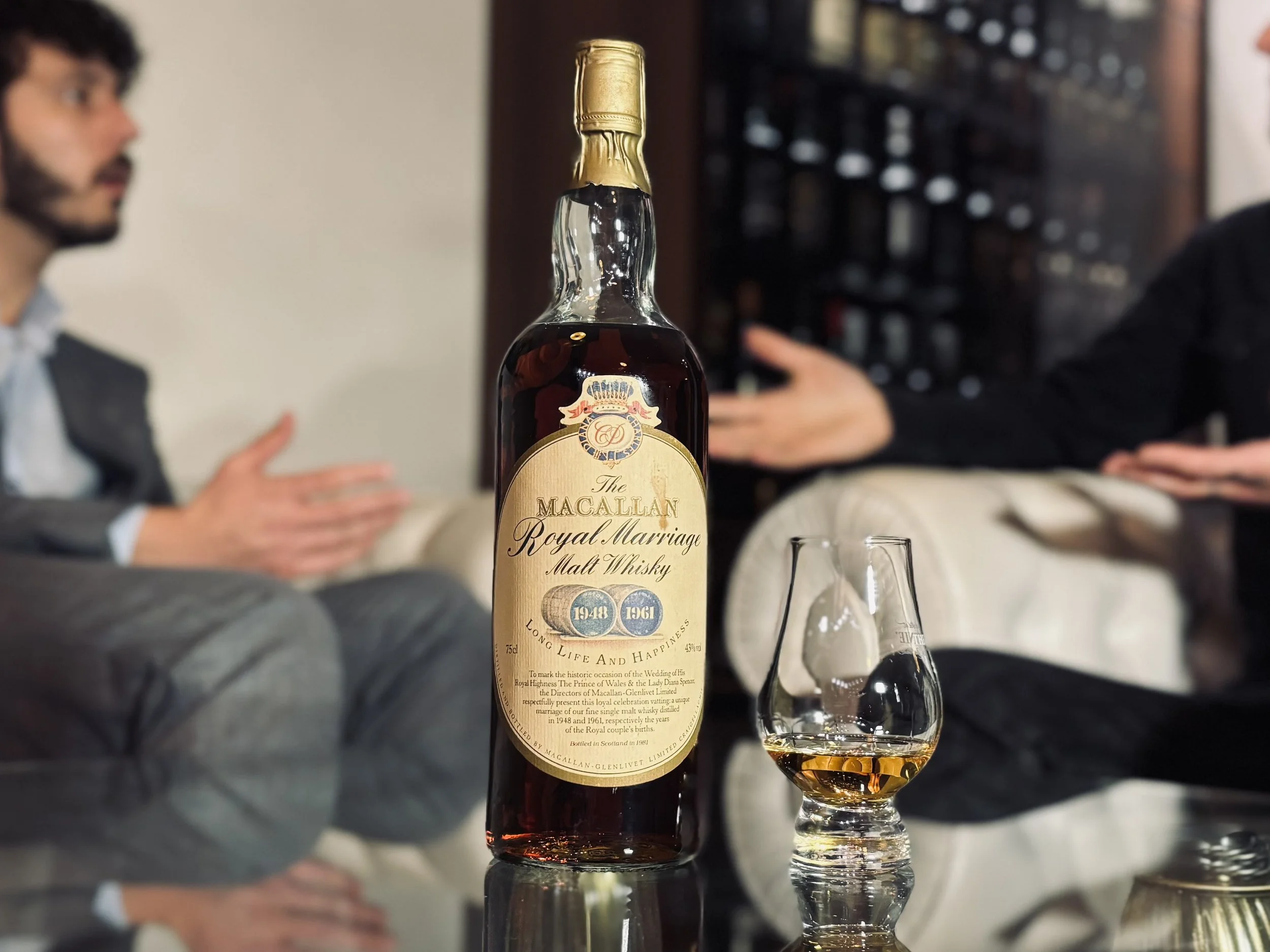
One of the most interesting topics that emerged during the conversation concerned the balance between passion and speculation.
For many enthusiasts, whisky remains first and foremost something to open, share, and taste. The idea of buying a bottle just to resell it years later may seem far removed from the original spirit of this world.
On the other hand, it is undeniable that some bottles have acquired significant value over time.
Perhaps the point is not to decide whether whisky is an investment or not, but to understand that it is a particular market, with its own dynamics that are not always predictable.
a conversation between enthusiasts
As we mentioned at the beginning of the episode, this discussion is purely for cultural and informational purposes.
This is not financial advice, but simply a conversation between enthusiasts about a phenomenon that has attracted a lot of attention in recent years.
After all, whiskey is first and foremost a drink meant to be shared.
And perhaps that is its greatest value.
-
Il whisky come investimento? Una conversazione tra appassionati
Il mondo del whisky è cambiato molto negli ultimi vent’anni.
Quello che un tempo era considerato semplicemente un distillato da degustare tra amici è diventato, per alcuni, anche un oggetto da collezione. In alcuni casi, persino un investimento.Bottiglie che un tempo si trovavano sugli scaffali a prezzi relativamente accessibili oggi compaiono nelle aste internazionali con cifre sorprendenti. Alcune distillerie chiuse sono diventate leggendarie, mentre determinate edizioni limitate hanno visto il loro valore crescere in modo significativo nel tempo.
Ma il whisky può davvero essere considerato un investimento?
Ed è proprio questa e altre domande che affronteremo nel primo episodio del Sam’s Moonshiner Podcast, in una conversazione informale con Thomas Hundsbichler, grande appassionato e profondo conoscitore del mondo del whisky.
Tom non è soltanto un collezionista. È anche il figlio di Rudi Hundsbichler, Keeper of the Quaich e fondatore del Claymore Whisky Club di Innsbruck, una figura che per molti appassionati locali rappresenta una vera leggenda.
Whisky e collezionismo
Per molti appassionati, collezionare whisky non nasce con l’idea di guadagnarci.
Spesso tutto parte da una semplice passione: una distilleria preferita, una bottiglia acquistata durante un viaggio, un’edizione limitata scoperta quasi per caso.Con il passare del tempo però alcune di queste bottiglie cambiano status. Diventano rare, difficili da trovare, desiderate da altri collezionisti.
È qui che entra in gioco il cosiddetto mercato secondario.
Aste specializzate, piattaforme di vendita e collezionisti privati hanno contribuito alla nascita di un vero e proprio ecosistema in cui alcune bottiglie possono aumentare di valore nel tempo.
Naturalmente non tutte.
Il ruolo delle aste e del mercato secondario
Negli ultimi anni il mercato del whisky da collezione è diventato molto più visibile.
Case d’asta specializzate organizzano vendite dedicate esclusivamente al whisky. Alcune bottiglie raggiungono cifre notevoli, attirando l’attenzione anche di chi normalmente non si interesserebbe al mondo dei distillati.
Questo ha alimentato la percezione che il whisky possa essere una forma di investimento alternativa.
La realtà, però, è più complessa.
Il valore di una bottiglia dipende da molti fattori:
rarità dell’edizione
reputazione della distilleria
stato di conservazione
domanda nel mercato dei collezionisti
storia e provenienza della bottiglia
E soprattutto da un elemento imprevedibile: il tempo.
Tra passione e speculazione
Uno dei temi più interessanti emersi durante la conversazione riguarda proprio l’equilibrio tra passione e speculazione.
Per molti appassionati il whisky rimane prima di tutto qualcosa da aprire, condividere e degustare. L’idea di acquistare una bottiglia solo per rivenderla anni dopo può sembrare lontana dallo spirito originale di questo mondo.
D’altra parte è innegabile che alcune bottiglie abbiano acquisito nel tempo un valore significativo.
Il punto forse non è decidere se il whisky sia o meno un investimento, ma capire che si tratta di un mercato particolare, con dinamiche proprie e non sempre prevedibili.
Una conversazione tra appassionati
Come abbiamo precisato anche all’inizio dell’episodio, questa discussione ha uno scopo puramente culturale e informativo.
Non si tratta di consigli finanziari, ma semplicemente di una riflessione tra appassionati su un fenomeno che negli ultimi anni ha attirato molta attenzione.
Il whisky, dopotutto, rimane prima di tutto una bevanda nata per essere condivisa.
E forse è proprio questo il suo valore più grande.
-
Whisky als Investition? Ein Gespräch unter Liebhabern
Die Welt des Whiskys hat sich in den letzten zwanzig Jahren stark verändert. Was einst einfach als Destillat zum Genießen unter Freunden galt, ist für manche zu einem Sammlerstück geworden. In einigen Fällen sogar zu einer Investition.
Flaschen, die früher zu relativ erschwinglichen Preisen in den Regalen standen, werden heute auf internationalen Auktionen zu erstaunlichen Preisen angeboten. Einige geschlossene Brennereien sind legendär geworden, während bestimmte limitierte Auflagen im Laufe der Zeit erheblich an Wert gewonnen haben.
Aber kann Whisky wirklich als Investition betrachtet werden?
Genau diese und andere Fragen werden wir in der ersten Folge des Sam's Moonshiner Podcasts in einem informellen Gespräch mit Thomas Hundsbichler, einem großen Liebhaber und Kenner der Welt des Whiskys, behandeln.
Tom ist nicht nur Sammler. Er ist auch der Sohn von Rudi Hundsbichler, Keeper of the Quaich und Gründer des Claymore Whisky Clubs in Innsbruck, einer Persönlichkeit, die für viele lokale Liebhaber eine echte Legende ist.
Whisky und Sammeln
Für viele Liebhaber entsteht das Sammeln von Whisky nicht mit der Absicht, damit Geld zu verdienen. Oft beginnt alles mit einer einfachen Leidenschaft: einer Lieblingsbrennerei, einer auf einer Reise gekauften Flasche, einer fast zufällig entdeckten limitierten Auflage.
Im Laufe der Zeit ändern jedoch einige dieser Flaschen ihren Status. Sie werden selten, schwer zu finden und von anderen Sammlern begehrt.
Hier kommt der sogenannte Sekundärmarkt ins Spiel.
Spezialisierte Auktionen, Verkaufsplattformen und private Sammler haben zur Entstehung eines regelrechten Ökosystems beigetragen, in dem einige Flaschen im Laufe der Zeit an Wert gewinnen können.
Natürlich nicht alle.
Die Rolle von Auktionen und Sekundärmarkt
In den letzten Jahren ist der Markt für Sammlerwhisky deutlich sichtbarer geworden.
Spezialisierte Auktionshäuser organisieren Versteigerungen, die ausschließlich Whisky gewidmet sind. Einige Flaschen erzielen bemerkenswerte Summen und ziehen damit auch die Aufmerksamkeit derjenigen auf sich, die sich normalerweise nicht für die Welt der Spirituosen interessieren.
Dies hat die Wahrnehmung gefördert, dass Whisky eine alternative Form der Investition sein kann.
Die Realität ist jedoch komplexer.
Der Wert einer Flasche hängt von vielen Faktoren ab:
Seltenheit der Auflage
Ruf der Brennerei
Erhaltungszustand
Nachfrage auf dem Sammlermarkt
Geschichte und Herkunft der Flasche
Und vor allem von einem unvorhersehbaren Faktor: der Zeit.
Zwischen Leidenschaft und Spekulation
Eines der interessantesten Themen, das während des Gesprächs zur Sprache kam, betrifft genau das Gleichgewicht zwischen Leidenschaft und Spekulation.
Für viele Liebhaber ist Whisky in erster Linie etwas, das man öffnet, teilt und genießt. Die Idee, eine Flasche nur zu kaufen, um sie Jahre später wieder zu verkaufen, scheint weit entfernt vom ursprünglichen Geist dieser Welt zu sein.
Andererseits ist es unbestreitbar, dass einige Flaschen im Laufe der Zeit einen erheblichen Wert erlangt haben.
Vielleicht geht es nicht darum, zu entscheiden, ob Whisky eine Investition ist oder nicht, sondern zu verstehen, dass es sich um einen besonderen Markt mit eigenen, nicht immer vorhersehbaren Dynamiken handelt.
Ein Gespräch unter Liebhabern
Wie wir bereits zu Beginn der Folge erwähnt haben, dient diese Diskussion ausschließlich kulturellen und informativen Zwecken.
Es handelt sich nicht um Finanzberatung, sondern lediglich um eine Reflexion unter Liebhabern über ein Phänomen, das in den letzten Jahren viel Aufmerksamkeit auf sich gezogen hat.
Whisky ist schließlich in erster Linie ein Getränk, das zum Teilen gedacht ist.
Und vielleicht ist genau das sein größter Wert.

If you would like to listen to the full conversation with Thomas Hundsbichler, you can find the first episode of the Sam's Moonshiner Podcast below. 👇🏻