
robert burns - whisky, poetry & scotland
To fully appreciate what we have in our glass, it is essential to explore the history, origins and cultural context of the drink in question.
When we think of Scotch Whisky, we instinctively picture castles perched on misty hills, bagpipes and kilts. Yet Scottish identity is not found solely in its landscapes or traditions. It lives on in words too.
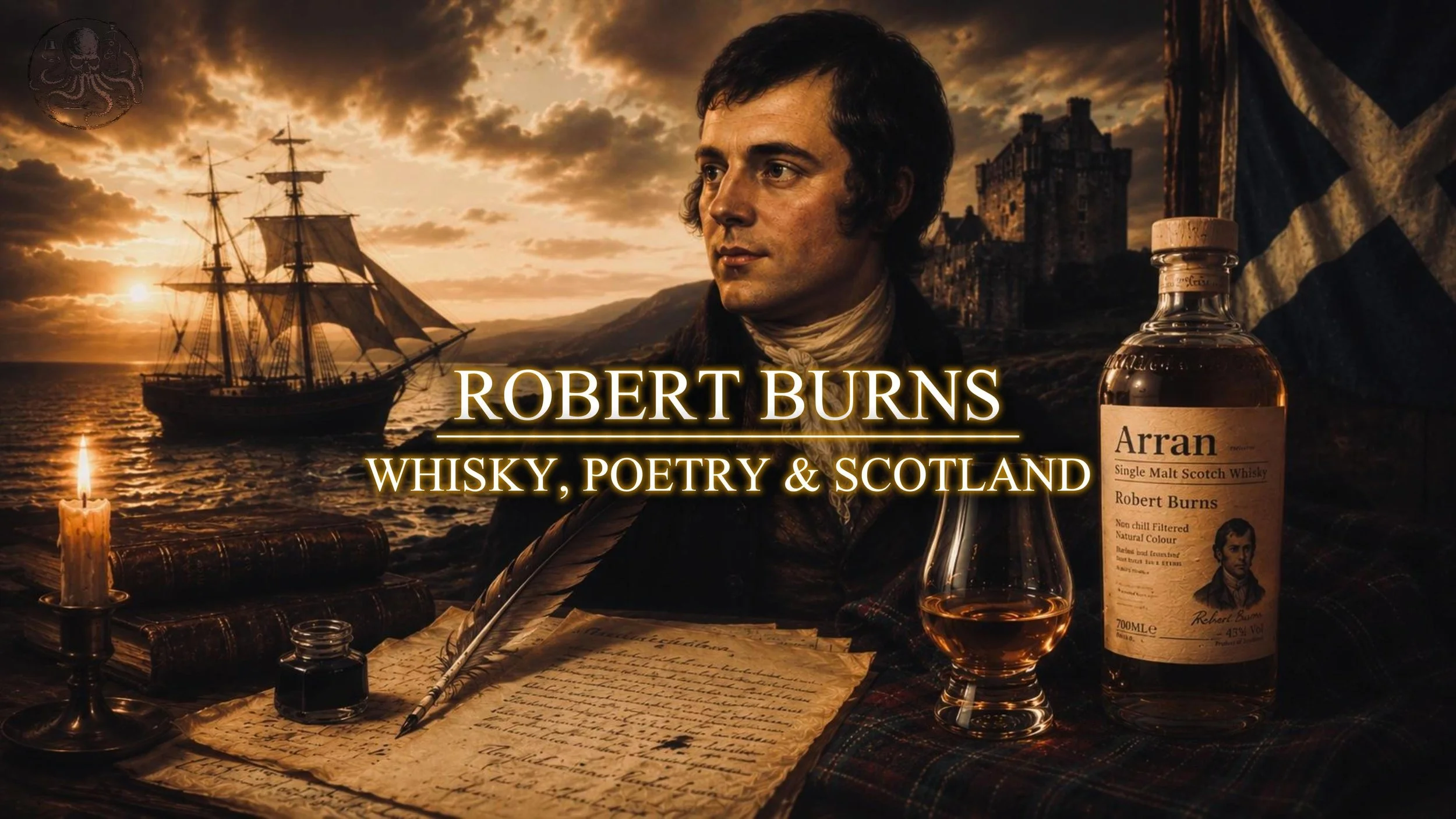
Of all the figures who have helped shape Scottish culture, few hold a place as special as Robert Burns. Poet, songwriter and national icon, Burns continues to be celebrated around the world today, more than two centuries after his death.
Born in 1759 in Alloway, in the south of Scotland, Robert Burns came from a family of farmers. His youth was marked by work in the fields and a life far from comfortable. It is precisely these origins that profoundly influenced his writing.
His poems do not merely recount grand ideals or abstract concepts. They recount the lives of ordinary people: love, friendship, work, daily struggles and the relationship with nature. Burns possessed an extraordinary ability to observe the world around him and transform it into verse accessible to all.
One of the most important aspects of his work was his choice to write frequently in Scots, the traditional Scottish language. At a time when many writers were trying to conform to the most prestigious literary models, Burns gave voice to the language of his people, helping to preserve it and confer literary dignity upon it.
His fame grew rapidly following the publication of the collection “Poems, Chiefly in the Scottish Dialect”, which transformed him from a young farmer into a figure recognized throughout Scotland.
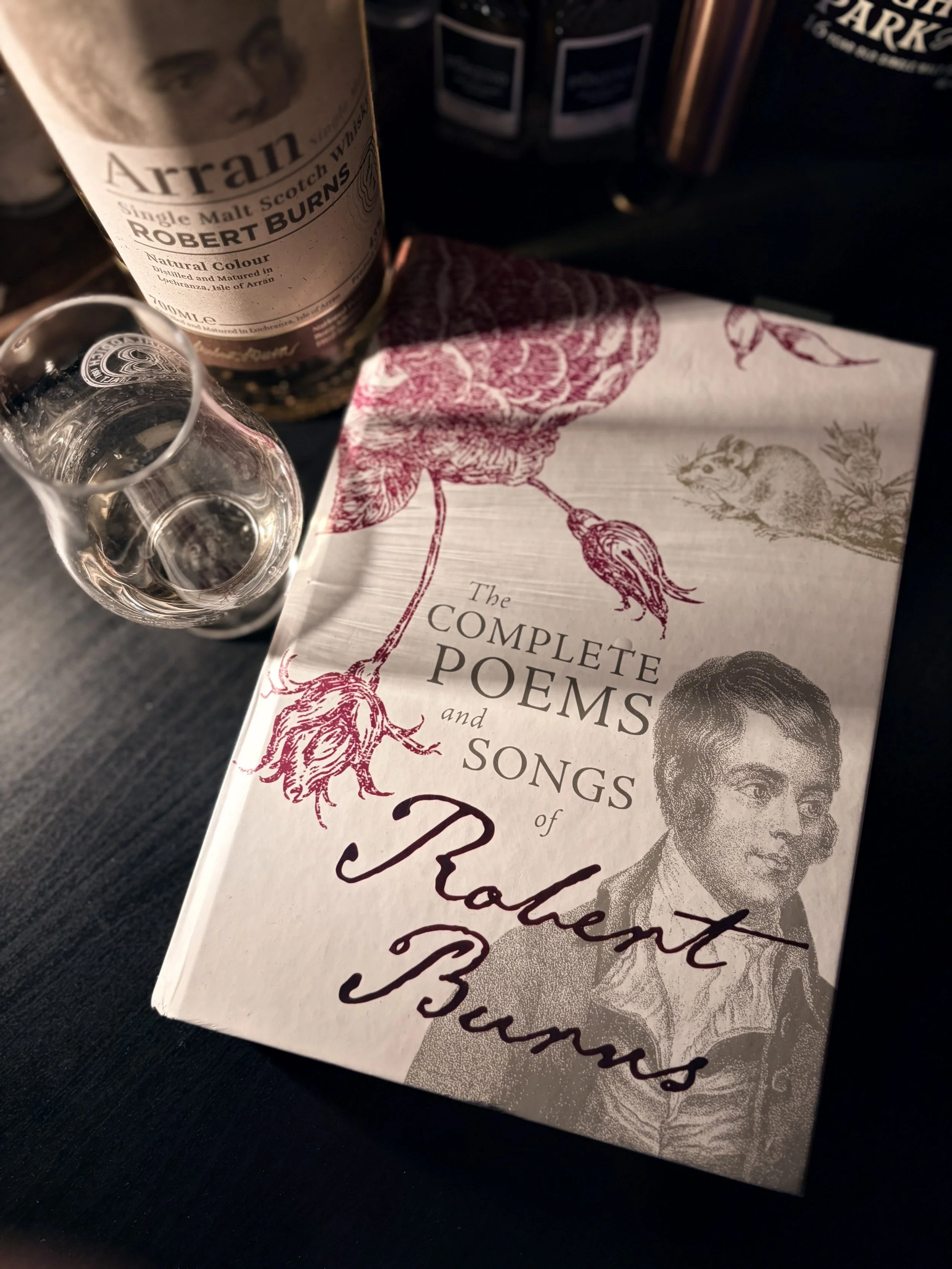
Even today, many people know at least one of his works without realizing it. Every year, during New Year’s celebrations, millions of people sing “Auld Lang Syne”, a song about friendship, memory and the passing of time. Burns’s words thus continue to unite people from different cultures and countries.
Among his most famous works are also “To a Mouse”, “Ae Fond Kiss”, “A Red, Red Rose” and “Tam o’ Shanter”, a tale blending humour, folklore and Scottish superstitions.
Burns’ influence is so profound that every year, on 25 January, his birthday, the Burns Supper is celebrated. This tradition, which began shortly after his death, brings people together in Scotland and around the world for a dinner in his honour. During the evening, poems are recited, toasts are made, the ever-present haggis is served and, of course, whisky is enjoyed.
And it is whisky itself that represents one of the most fascinating aspects of Burns’s works.
In the 18th century, whisky was part of everyday Scottish life. It was not regarded as a collector’s item or a drink for specialist tasting, but a common feature in homes, taverns and social gatherings. Burns knew this world well and wrote about it repeatedly in his works.
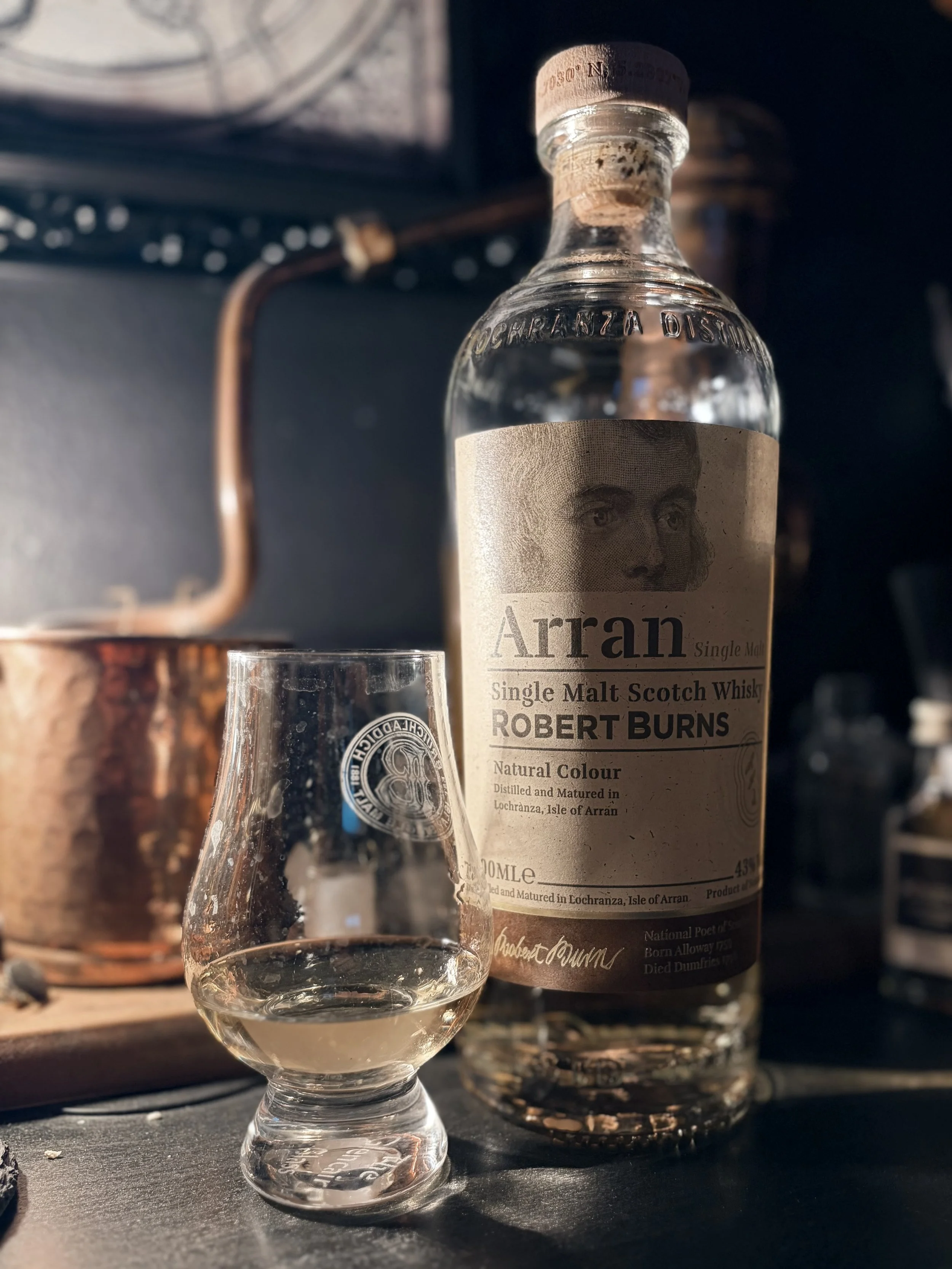
In works such as “Scotch Drink”, the poet openly celebrates Scotland’s national spirit, transforming it into a cultural symbol. In “John Barleycorn”, however, he uses barley as the protagonist of an allegorical narrative that recounts the transformation of the grain and the birth of alcoholic beverages.
“Tam o’ Shanter” is also particularly interesting. After a long evening spent in the tavern, the protagonist stumbles upon a supernatural scene featuring dancing witches and eerie apparitions. In one of the work’s most famous passages, Burns suggests with irony that, thanks to whisky, even the devil might seem less fearsome.
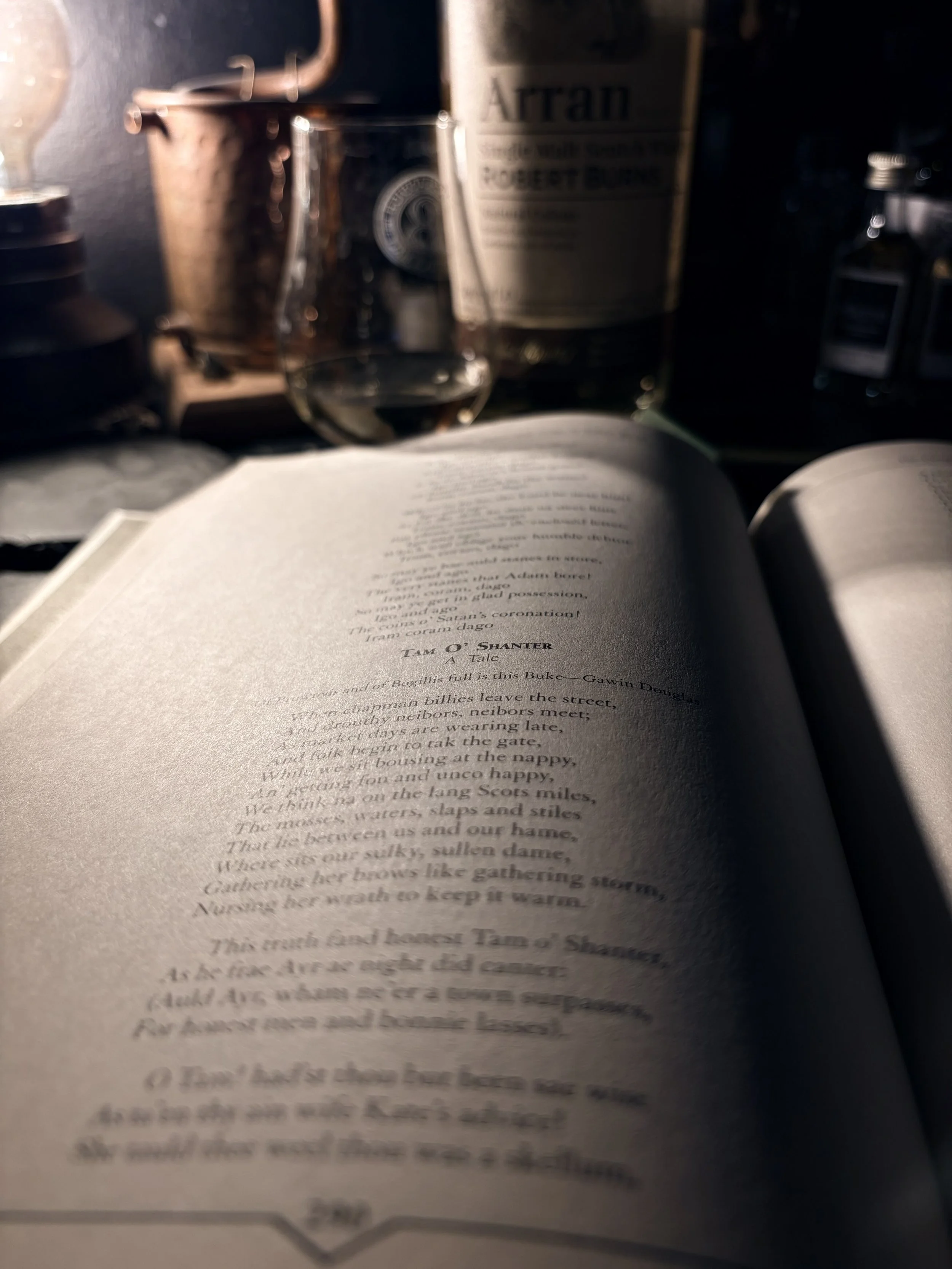
This approach reveals much about the relationship between Burns and whisky. In his writings, the spirit is never merely a drink. It is part of social life, friendships, stories told by the fireside and folk traditions.
Perhaps this is also why Robert Burns’ name remains linked to the world of whisky to this day. Both represent an essential part of Scottish identity and tell a story of people, traditions and collective memory.
More than two centuries after his death, Robert Burns lives on in his poems, in songs, in the celebrations that bear his name, and in the stories still told today over a glass of whisky.
Among the many quotes attributed to him, one has become particularly famous:
“Freedom and whisky gang thegither”.
Whether it is a simple quip or a deeper statement, it perfectly encapsulates two elements that hold a special place in the Scottish imagination.
And perhaps this is precisely the secret of Robert Burns’ legacy: his ability to transform the everyday life of his people into something universal.
-
Robert Burns: il poeta che diede voce alla Scozia
Per apprezzare al massimo ciò che abbiamo nel bicchiere è cruciale approfondire la storia, le origini ed il contesto culturale della bevanda in questione.
Quando pensiamo al whisky scozzese, istintivamente immaginiamo castelli arroccati su colline nebbiose, cornamuse e kilt. Eppure, l'identità scozzese non vive soltanto nei suoi paesaggi o nelle sue tradizioni. Vive anche nelle parole.
Tra tutte le figure che hanno contribuito a plasmare la cultura della Scozia, poche occupano un posto speciale quanto Robert Burns. Poeta, autore di canzoni e simbolo nazionale, Burns continua ancora oggi a essere celebrato in tutto il mondo, a oltre due secoli dalla sua morte.
Nato nel 1759 ad Alloway, nel sud della Scozia, Robert Burns proveniva da una famiglia di agricoltori. La sua giovinezza fu segnata dal lavoro nei campi e da una vita tutt'altro che agiata. Sono proprio queste origini ad influenzare profondamente la sua scrittura.
Le sue poesie non raccontano soltanto grandi ideali o concetti astratti. Raccontano la vita delle persone comuni: l'amore, l'amicizia, il lavoro, le difficoltà quotidiane e il rapporto con la natura. Burns possedeva una straordinaria capacità di osservare il mondo che lo circondava e trasformarlo in versi accessibili a tutti.
Uno degli aspetti più importanti della sua opera fu la scelta di scrivere spesso in Scots, la lingua tradizionale scozzese. In un periodo storico in cui molti autori cercavano di adattarsi ai modelli letterari più prestigiosi, Burns diede voce alla lingua del suo popolo, contribuendo a preservarla e a conferirle dignità letteraria.
La sua fama crebbe rapidamente dopo la pubblicazione della raccolta Poems, Chiefly in the Scottish Dialect, che lo trasformò da giovane agricoltore a figura riconosciuta in tutta la Scozia.
Ancora oggi, molte persone conoscono almeno una delle sue opere senza rendersene conto. Ogni anno, durante i festeggiamenti di Capodanno, milioni di persone cantano Auld Lang Syne, una canzone che parla di amicizia, memoria e del passare del tempo. Le parole di Burns continuano così a unire persone appartenenti a culture e paesi diversi.
Tra le sue opere più celebri troviamo anche “To a Mouse”, “Ae Fond Kiss”, “A Red, Red Rose” e “Tam o' Shanter", un racconto che mescola umorismo, folklore e superstizioni scozzesi.
L'influenza di Burns è così profonda che ogni anno, il 25 gennaio, giorno della sua nascita, viene celebrata la Burns Supper. Questa tradizione, nata poco dopo la sua morte, riunisce persone in Scozia e nel resto del mondo per una cena in suo onore. Durante la serata vengono recitate poesie, pronunciati brindisi, servito l'immancabile haggis e, naturalmente, degustato whisky scozzese.
Ed è proprio il whisky a rappresentare uno degli aspetti più affascinanti delle opere di Burns.
Nel XVIII secolo il whisky faceva parte della vita quotidiana scozzese. Non era considerato un prodotto da collezione o da degustazione specialistica, ma una presenza comune nelle case, nelle locande e nelle occasioni conviviali. Burns conosceva bene questo mondo e lo raccontò più volte nei suoi scritti.
In opere come “Scotch Drink”, il poeta celebra apertamente il distillato nazionale scozzese, trasformandolo in un simbolo culturale. In “John Barleycorn”, invece, utilizza l'orzo come protagonista di una narrazione allegorica che racconta la trasformazione del cereale e la nascita delle bevande alcoliche.
Particolarmente interessante è anche “Tam o' Shanter”. Dopo una lunga serata trascorsa in taverna, il protagonista si imbatte in una scena soprannaturale fatta di streghe danzanti e apparizioni inquietanti. In uno dei passaggi più celebri dell'opera, Burns suggerisce con ironia che, grazie al whisky, perfino il diavolo possa sembrare meno temibile.
Questo approccio rivela molto del rapporto tra Burns e il whisky. Nei suoi scritti, il distillato non è mai una semplice bevanda. È parte della vita sociale, delle amicizie, delle storie raccontate davanti al fuoco e delle tradizioni popolari.
Forse è anche per questo che il nome di Robert Burns continua a essere legato al mondo del whisky ancora oggi. Entrambi rappresentano una parte essenziale dell'identità scozzese e raccontano una storia fatta di persone, tradizioni e memoria collettiva.
A più di due secoli dalla sua scomparsa, Robert Burns continua a vivere nelle sue poesie, nelle canzoni, nelle celebrazioni che portano il suo nome e nelle storie che ancora oggi vengono raccontate attorno a un bicchiere di whisky.
Tra le tante frasi che gli vengono attribuite, una è diventata particolarmente celebre:
"Freedom and whisky gang thegither."
"Libertà e whisky vanno a braccetto."
Che sia una semplice battuta o una dichiarazione più profonda, racchiude perfettamente due elementi che occupano un posto speciale nell'immaginario scozzese.
E forse è proprio questo il segreto dell'eredità di Robert Burns: aver saputo trasformare la vita quotidiana del suo popolo in qualcosa di universale.
-
Um das, was wir im Glas haben, voll und ganz schätzen zu können, ist es entscheidend, sich mit der Geschichte, den Ursprüngen und dem kulturellen Kontext des jeweiligen Getränks auseinanderzusetzen.
Wenn wir an schottischen Whisky denken, stellen wir uns instinktiv Burgen vor, die auf nebligen Hügeln thronen, Dudelsäcke und Kilts. Doch die schottische Identität lebt nicht nur in ihren Landschaften oder Traditionen. Sie lebt auch in den Worten.
Unter all den Persönlichkeiten, die die Kultur Schottlands geprägt haben, nehmen nur wenige einen so besonderen Platz ein wie Robert Burns. Als Dichter, Liedermacher und Nationalheld wird Burns auch heute noch, mehr als zwei Jahrhunderte nach seinem Tod, weltweit gefeiert.
Robert Burns wurde 1759 in Alloway im Süden Schottlands in eine Bauernfamilie geboren. Seine Jugend war geprägt von der Arbeit auf den Feldern und einem Leben, das alles andere als wohlhabend war. Gerade diese Herkunft prägte sein Schreiben zutiefst.
Seine Gedichte erzählen nicht nur von großen Idealen oder abstrakten Konzepten. Sie erzählen vom Leben der einfachen Menschen: von Liebe, Freundschaft, Arbeit, den alltäglichen Schwierigkeiten und der Beziehung zur Natur. Burns besaß eine außergewöhnliche Fähigkeit, die Welt um sich herum zu beobachten und sie in Verse zu verwandeln, die für alle zugänglich waren.
Einer der wichtigsten Aspekte seines Schaffens war die Entscheidung, oft in Scots, der traditionellen schottischen Sprache, zu schreiben. In einer historischen Zeit, in der viele Autoren versuchten, sich den prestigeträchtigsten literarischen Vorbildern anzupassen, gab Burns der Sprache seines Volkes eine Stimme und trug so dazu bei, sie zu bewahren und ihr literarische Würde zu verleihen.
Sein Ruhm wuchs rasch nach der Veröffentlichung der Gedichtsammlung *Poems, Chiefly in the Scottish Dialect*, die ihn von einem jungen Bauern zu einer in ganz Schottland anerkannten Persönlichkeit machte.
Noch heute kennen viele Menschen mindestens eines seiner Werke, ohne sich dessen bewusst zu sein. Jedes Jahr singen Millionen von Menschen während der Neujahrsfeierlichkeiten “Auld Lang Syne”, ein Lied, das von Freundschaft, Erinnerung und dem Vergehen der Zeit handelt. So verbinden Burns’ Worte weiterhin Menschen aus verschiedenen Kulturen und Ländern.
Zu seinen berühmtesten Werken zählen auch „To a Mouse“, „Ae Fond Kiss“, „A Red, Red Rose“ und „Tam o' Shanter“, eine Erzählung, die schottischen Humor, Folklore und Aberglauben miteinander verbindet.
Burns’ Einfluss ist so tiefgreifend, dass jedes Jahr am 25. Januar, seinem Geburtstag, das Burns Supper gefeiert wird. Diese Tradition, die kurz nach seinem Tod entstand, bringt Menschen in Schottland und auf der ganzen Welt zu einem Abendessen zu seinen Ehren zusammen. Im Laufe des Abends werden Gedichte vorgetragen, Toasts ausgesprochen, der unverzichtbare Haggis serviert und natürlich schottischer Whisky verkostet.
Und gerade der Whisky stellt einen der faszinierendsten Aspekte von Burns’ Werken dar.
Im 18. Jahrhundert war Whisky Teil des schottischen Alltags. Er galt nicht als Sammlerstück oder Spezialität für Kenner, sondern war in den Häusern, in den Wirtshäusern und bei geselligen Anlässen allgegenwärtig. Burns kannte diese Welt gut und schilderte sie mehrfach in seinen Schriften.
In Werken wie „Scotch Drink“ feiert der Dichter das schottische Nationalgetränk offen und macht es zu einem kulturellen Symbol. In „John Barleycorn“ hingegen nutzt er die Gerste als Protagonisten einer allegorischen Erzählung, die von der Verwandlung des Getreides und der Entstehung alkoholischer Getränke handelt.
Besonders interessant ist auch „Tam o' Shanter“. Nach einem langen Abend in der Taverne stößt der Protagonist auf eine übernatürliche Szene aus tanzenden Hexen und unheimlichen Erscheinungen. In einer der berühmtesten Passagen des Werks deutet Burns ironisch an, dass dank des Whiskys sogar der Teufel weniger furchterregend erscheinen könne.
Dieser Ansatz verrät viel über die Beziehung zwischen Burns und dem Whisky. In seinen Schriften ist das Destillat nie nur ein einfaches Getränk. Es ist Teil des gesellschaftlichen Lebens, der Freundschaften, der Geschichten, die am Kamin erzählt werden, und der Volkstraditionen.
Vielleicht ist das auch der Grund, warum der Name Robert Burns auch heute noch mit der Welt des Whiskys verbunden ist. Beide sind ein wesentlicher Bestandteil der schottischen Identität und erzählen eine Geschichte aus Menschen, Traditionen und kollektivem Gedächtnis.
Mehr als zwei Jahrhunderte nach seinem Tod lebt Robert Burns weiter in seinen Gedichten, in den Liedern, in den nach ihm benannten Feierlichkeiten und in den Geschichten, die noch heute bei einem Glas Whisky erzählt werden.
Unter den vielen Zitaten, die ihm zugeschrieben werden, ist eines besonders berühmt geworden:
„Freedom and whisky gang thegither.“
„Freiheit und Whisky gehen Hand in Hand.“
Ob es sich nun um einen einfachen Witz oder eine tiefgründigere Aussage handelt, dieser Satz fasst perfekt zwei Elemente zusammen, die einen besonderen Platz in der schottischen Vorstellungswelt einnehmen.
Und vielleicht ist genau das das Geheimnis des Vermächtnisses von Robert Burns: dass er es verstanden hat, den Alltag seines Volkes in etwas Universelles zu verwandeln.